Marine Stinger Safety in Townsville: What Visitors Need to Know
Townsville sits in tropical North Queensland, where marine stinger risk is highest during the warmer months. The typical local stinger season runs from November to May, although marine stingers can still occur outside that period.
The practical answer for most visitors is simple: use designated or patrolled swimming areas where they are available, swim between the red-and-yellow flags, and treat current beach signs, lifeguard advice and Townsville City Council beach information as the final word on the day you swim.
None of this makes Townsville an unsafe place to visit. People swim here year round. It simply means swimming in the tropics comes with a short list of habits worth learning before your first beach day — see our Townsville beaches guide and first-time visitor guide for the wider picture.
Quick visitor information
- Emergency
- Call Triple Zero (000) for a suspected serious marine sting
- Typical stinger season
- November to May
- Highest-risk period
- The warmer months
- Best swimming choice
- Patrolled or designated swimming areas
- Stinger nets
- Reduce risk, but are not complete protection
- Protective clothing
- A full-body stinger suit is recommended in season
- Main species of concern
- Box jellyfish and Irukandji
- Before swimming
- Check current signs and Townsville City Council beach status
- Best for
- Beach visitors · Families · Swimmers · First-time visitors
- Time needed
- A few minutes before visiting the beach
- Cost
- Free information
- Best time to visit
- Check before every planned swim
Local verdict
Townsville swimming is manageable when visitors follow current beach-safety advice, and current signs and official warnings should always take priority over general online advice.
In an emergency
Call Triple Zero (000) immediately for a suspected serious marine sting, particularly if the person collapses, has breathing difficulty, becomes unconscious or develops severe symptoms. Follow the instructions given by emergency services. If the person is unresponsive and not breathing normally, begin CPR.
What is stinger season?
Townsville's typical stinger season runs from November through May. Risk is generally higher in warmer tropical waters, which is why the season tracks the build-up, wet season and early autumn rather than the cooler dry-season months.
Treat that window as a practical seasonal guide, not a guarantee. Dangerous marine stingers can occur outside the formal season, so the safest habit is to check current signage and official beach information every time you plan to swim — not once at the start of your trip.
Which marine stingers matter?
Box jellyfish
Box jellyfish can cause very painful and potentially life-threatening stings. They are a serious tropical marine hazard, and a suspected serious sting needs immediate action rather than a wait-and-see approach.
Irukandji
Irukandji jellyfish are very small, and the initial sting may seem relatively minor. Significant symptoms can develop afterwards, so urgent medical assessment matters if Irukandji syndrome is suspected.
For clinical detail, follow Queensland Government marine stinger guidance and the Queensland Poisons Information Centre (13 11 26).
Where is it safest to swim?
- Choose a patrolled beach where one is available.
- Swim between the red-and-yellow flags.
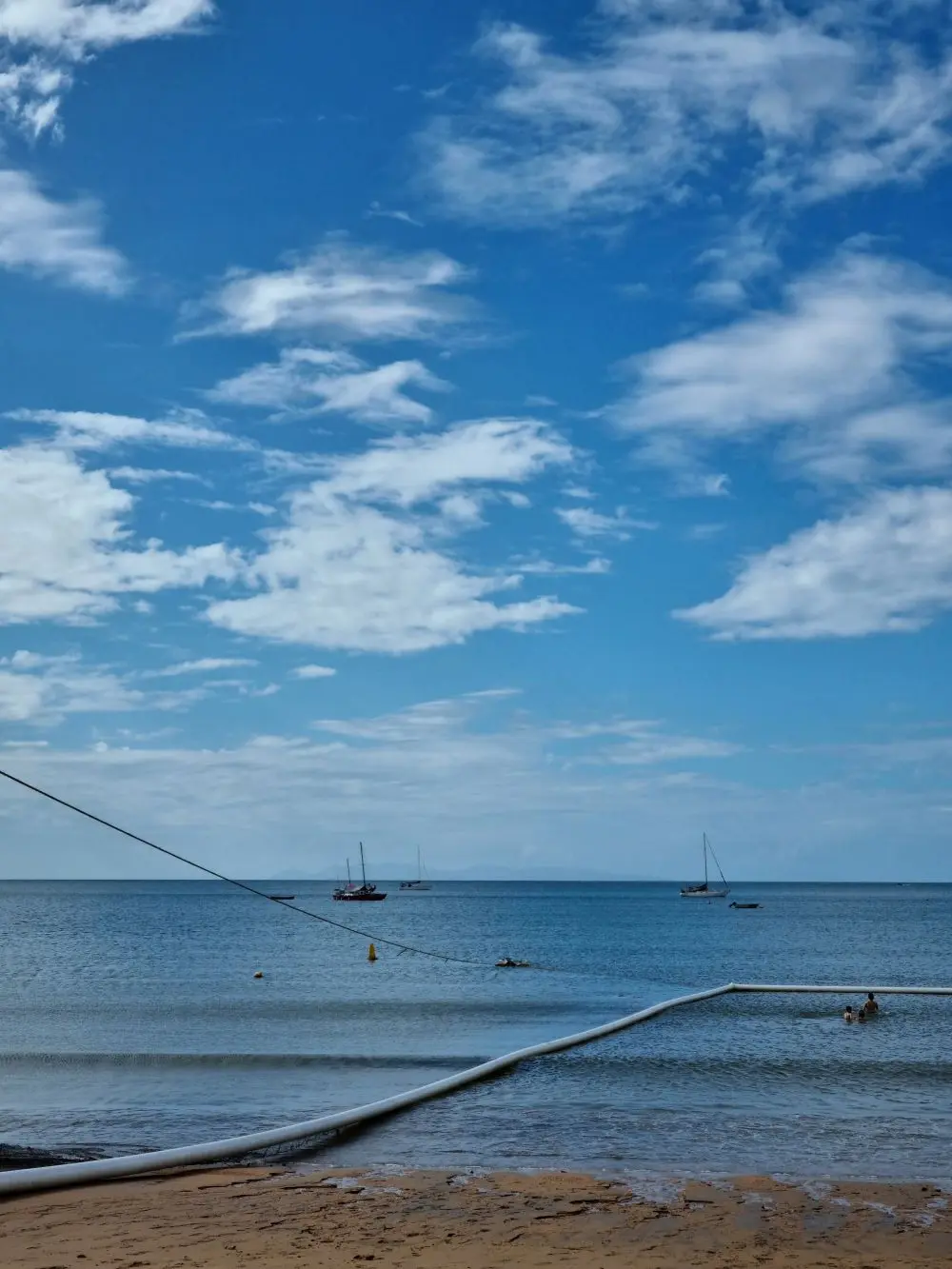
- Use designated swimming areas and stinger enclosures where they are provided.
- Read and follow the current signs at the beach entrance.
- Follow lifeguard and Council advice, which reflects conditions on the day.
Selected Townsville and Magnetic Island beaches may have seasonal stinger enclosures. Installation and removal dates change, so check current Council information before swimming rather than relying on a fixed list.
How effective are stinger nets?
Stinger nets reduce risk but do not eliminate it.
- Small jellyfish can pass through or around an enclosure.
- Stay well inside the designated enclosure rather than swimming beside it.
- Do not sit on, climb on or swim directly against the net.
- Follow lifeguard advice, including any instruction to leave the water.
- Protective clothing adds another useful layer of protection inside the net.
Stinger suits
A full-body Lycra-style stinger suit reduces the amount of exposed skin, which is the main practical reason they are commonly recommended for swimming in tropical North Queensland. They make particular sense during the warmer, higher-risk months.
A suit is a sensible layer, not a guarantee — it does not remove all risk, and you still need sunscreen on hands, feet, face and any other exposed skin. Hire and purchase options exist locally; no particular brand is needed.
Beaches without nets or lifeguards
Many Townsville beaches are not patrolled, and some do not have seasonal stinger enclosures at all. Calm-looking water does not mean a location is the safest place to swim — quiet northern beaches often look the most inviting precisely because nobody is watching over them.
Check current Council information before entering the water, and if you are unsure, choose a patrolled option instead. Our beaches guide explains which beaches suit which kind of visit.
What to do if someone is stung
Suspected serious tropical jellyfish sting:
- Call Triple Zero (000).
- Follow the instructions given by emergency services.
- Use vinegar for suspected dangerous tropical jellyfish stings where current Queensland guidance recommends it.
- Begin CPR if the person is unresponsive and not breathing normally.
Never delay emergency assistance to look up advice. For non-emergency questions about a sting, the Queensland Poisons Information Centre on 13 11 26 can advise.
Vinegar: an important distinction
Vinegar should not be treated as the correct first aid for every jellyfish sting. Current Queensland guidance recommends it for suspected dangerous tropical jellyfish stings, such as box jellyfish.
Do not use vinegar for a suspected bluebottle sting.
Bluebottle first aid differs from dangerous tropical jellyfish first aid. If you are not sure what caused the sting, follow current Queensland Health marine stinger guidance or call the Poisons Information Centre on 13 11 26, and call Triple Zero (000) if the sting looks serious.
Suspected box jellyfish emergency
Call Triple Zero (000) immediately for a suspected serious box jellyfish sting, particularly if the person collapses, has breathing difficulty, becomes unconscious or develops severe systemic symptoms.
If the person is unresponsive and not breathing normally, begin CPR and follow emergency-services instructions.
Irukandji symptoms
Reported symptoms of Irukandji syndrome can include:
- Severe pain
- Restlessness
- Sweating
- Nausea
- Vomiting
- Worsening systemic symptoms
Symptoms alone are not a diagnosis. Seek urgent medical assessment if an Irukandji sting is suspected or symptoms become severe, and call Triple Zero (000) if the person deteriorates.
Bluebottles
Bluebottles are a different animal from box jellyfish and Irukandji, and first aid differs. Vinegar is not recommended for a suspected bluebottle sting. Follow current Queensland Health guidance, and seek medical help if symptoms are severe or the person is unwell beyond local pain at the sting site.
Children and stinger safety
- Use designated or patrolled swimming areas.
- Supervise children closely in and near the water.
- Use protective clothing during the higher-risk months.
- Follow the current signs at each beach.
- Teach children not to touch jellyfish or tentacles washed onto the beach — washed-up marine stingers may still sting.
Magnetic Island
Marine-stinger considerations apply on Magnetic Island just as they do on the mainland. Selected island beaches may have seasonal enclosures, but not every bay has the same swimming setup or patrol arrangement, so check current local signs and official beach information before you swim.
Wet weather and stinger nets
Severe weather can affect beaches and stinger enclosures. Nets may be temporarily removed, swimming areas may close, and water quality and debris can change after heavy rain or a storm. Check current beach status before heading down, and have a wet-weather plan ready.
Stinger safety and crocodile safety
Stinger precautions do not replace crocodile awareness. Townsville is tropical North Queensland, so follow all beach signage, use designated swimming areas and follow official Crocwise guidance where relevant. Our beaches guide covers this alongside general beach planning.
Common stinger-safety mistakes
- Assuming stinger season is the only time marine stingers can occur
- Treating stinger nets as complete protection
- Swimming next to an enclosure rather than inside it
- Ignoring the red-and-yellow flags
- Swimming at an unpatrolled beach because the water looks calm
- Not wearing protective clothing during higher-risk periods
- Touching jellyfish washed onto the beach
- Using vinegar indiscriminately for every jellyfish sting
- Assuming Magnetic Island beaches are automatically safer
- Relying on an old blog post for current stinger-net status
- Ignoring beach closures after severe weather
Check current status before you swim
- Townsville City Council — beaches, lifeguards and stinger enclosures
- Queensland Government — marine stinger safety
- Queensland Poisons Information Centre — 13 11 26
- Surf Life Saving — Beachsafe beach and patrol information
- Bureau of Meteorology — Queensland warnings and the Townsville Disaster Dashboard
- Useful contacts for Townsville visitors
Frequently asked questions
Related guides
Townsville Beaches
Where to swim, patrolled areas and beach planning.
The Strand
Townsville's main patrolled foreshore and swimming precinct.
Townsville with Kids
Family planning, including safer swimming options.
First Time in Townsville
Orientation and trip planning for first visits.
Beat the Heat
Planning outdoor and water time around tropical heat.
Rainy Day Activities
Alternatives when weather closes beaches.
Magnetic Island Day Trip
Planning a day on the island, including bays and beaches.
Magnetic Island Ferry
Getting across, timetables and practicalities.
Useful Contacts
Emergency, Council and official contact details.
About this guide
Written by Duncan Ross
Duncan has lived in Townsville since 2023 and writes Townsville Guide using local knowledge and carefully checked information.
This safety guide is based on current advice from Queensland Government health and emergency sources, Townsville City Council, Surf Life Saving guidance and official marine-stinger information.
Last checked: 7 August 2026
Access, safety, opening hours, rules or transport information was checked against relevant official sources where available.
Spotted an error or something that has changed?
Please let us know so we can check and update the guide.
Report an update