A Short, Interesting History of Townsville
How a Muddy Creek Became the Capital of North Queensland
All images in this section are AI-generated visual interpretations. They illustrate how Townsville could have looked in the past and how it may be visually represented in the present. These are not exact photographic records.
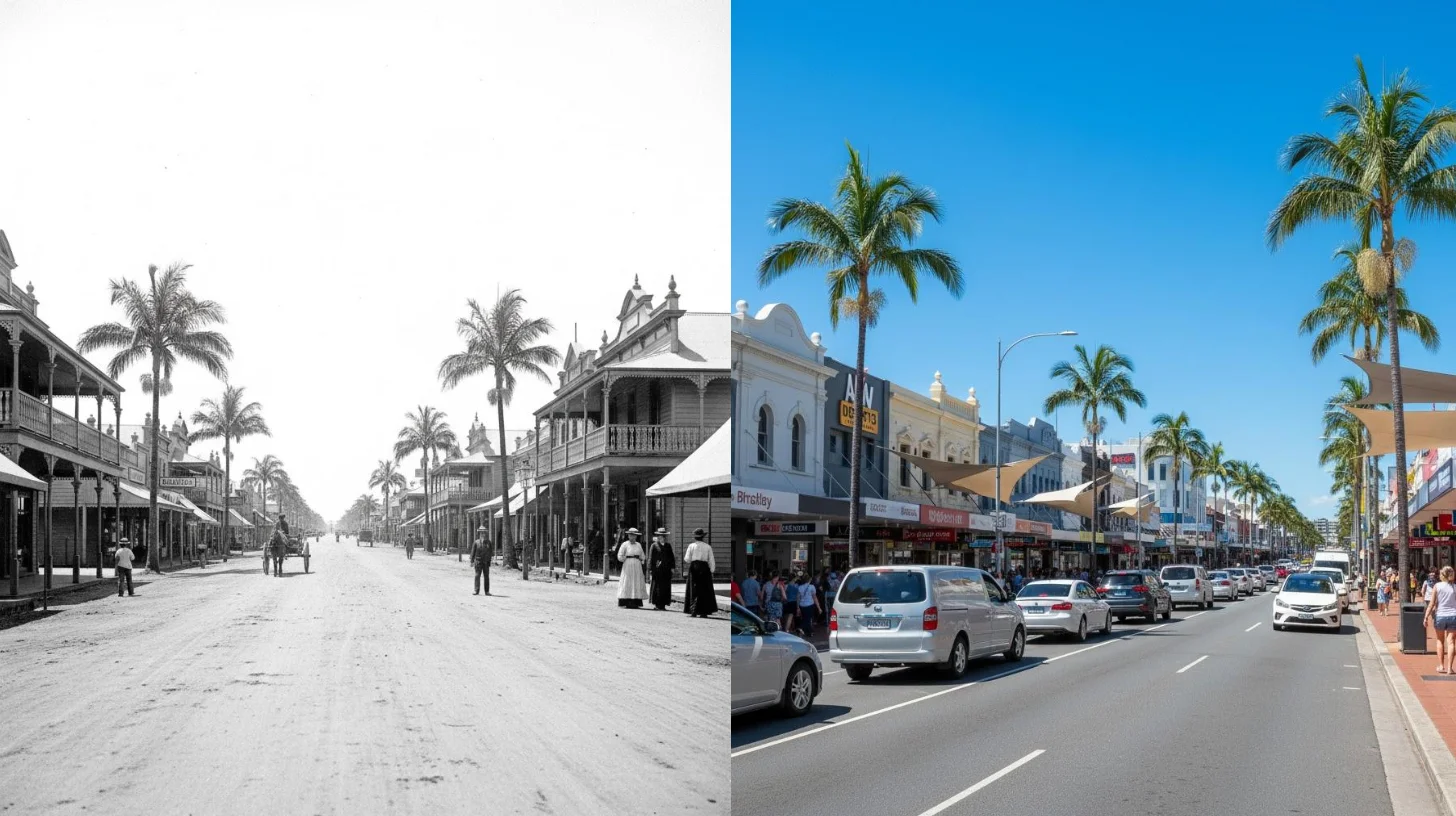
AI interpretation: A visual comparison of historical and modern Townsville.
When you stroll along The Strand at sunset or see Castle Hill glowing orange in the late afternoon, it's hard to imagine that Townsville began as a makeshift camp beside a muddy creek. Yet in less than 200 years, that tiny settlement grew into Northern Australia's largest city — a working tropical port, a gateway to the Great Barrier Reef, and a place where layers of history sit quietly beneath everyday life.
This page tells Townsville's story in plain language, not as a history lecture, but as a series of turning points:
- Life on Country long before "Townsville"
- Explorers searching for a northern port
- Gold rush fever and the birth of a frontier town
- Cyclones, floods, and tropical resilience
- Townsville's role in World War II
- Suburban growth, universities, and industry
- How all of that history still shapes the Townsville we see today
By the bottom of this page, visitors should feel like they understand the place beneath their feet.
The Garrison City
You can't tell the story of Townsville without its stripes. As Australia's largest Garrison city, our military history is etched into the landscape—from the WWII observation bunkers on Castle Hill to the massive Lavarack Barracks.
🎖️ It's why our Anzac Day Dawn Service at The Strand isn't just an event; it's the heartbeat of the city.
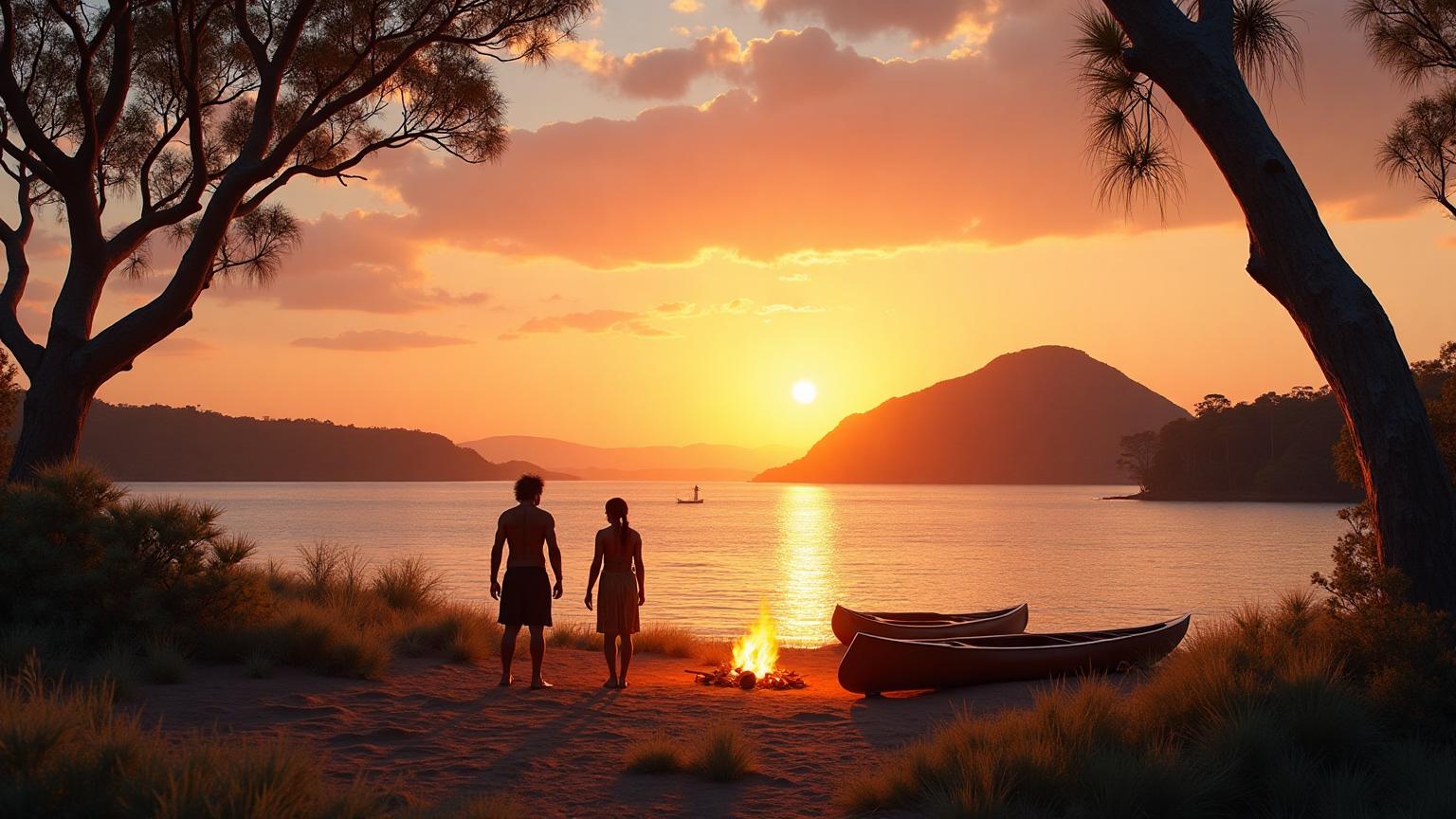
AI interpretation: What Townsville could have looked like circa pre-1864 — Life on Country.
Long Before Townsville: Life on Country
Bindal and Wulgurukaba Country
Long before European arrival, the land and waters around today's Townsville belonged to the Bindal (south of Ross River) and Wulgurukaba (north of Ross River) peoples.
This region — the creeks, wetlands, hills, reefs and river mouths — was not just geography. It was story, identity, kinship and law.
People moved with the seasons:
- Fishing the mangroves, beaches and reefs
- Gathering foods from the wetlands and woodlands
- Crossing to Yunbenun (Magnetic Island) by canoe
- Caring for Country through cultural burning
When you look across Cleveland Bay or stand beneath the shade of an ancient fig tree, you're seeing places that have been significant for thousands of years.
Townsville's story begins here — with a deep, enduring Aboriginal connection to Country.
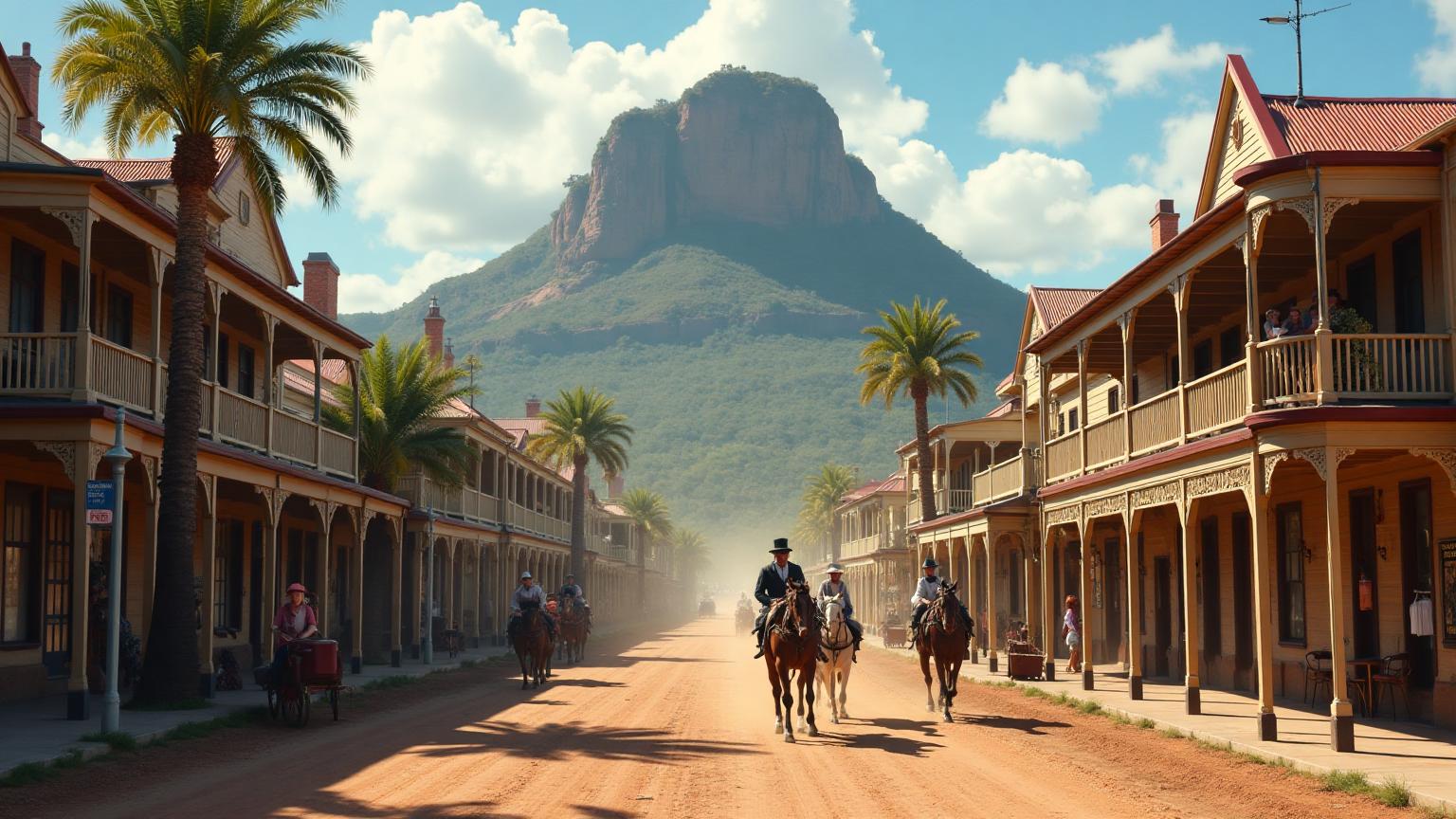
AI interpretation: What Townsville could have looked like circa 1880s.
Searching for a Northern Port (1840s–1860s)
Cattle, Coastlines and the Quest for a Harbour
By the mid-1800s, European pastoralists pushed cattle runs across North Queensland. But without a reliable port, the region struggled to trade.
Enter three key figures:
- Robert Towns – businessman, ship owner, pastoralist
- John Melton Black – Towns' northern manager
- Andrew Ball – explorer sent to find a workable harbour
From their base at Woodstock Station, they searched the coastline of Cleveland Bay for a safe anchorage. These journeys were hot, rough and risky — mosquitoes, heat haze, flood-prone creeks, and no guarantee of success.
But in April 1864, everything changed.
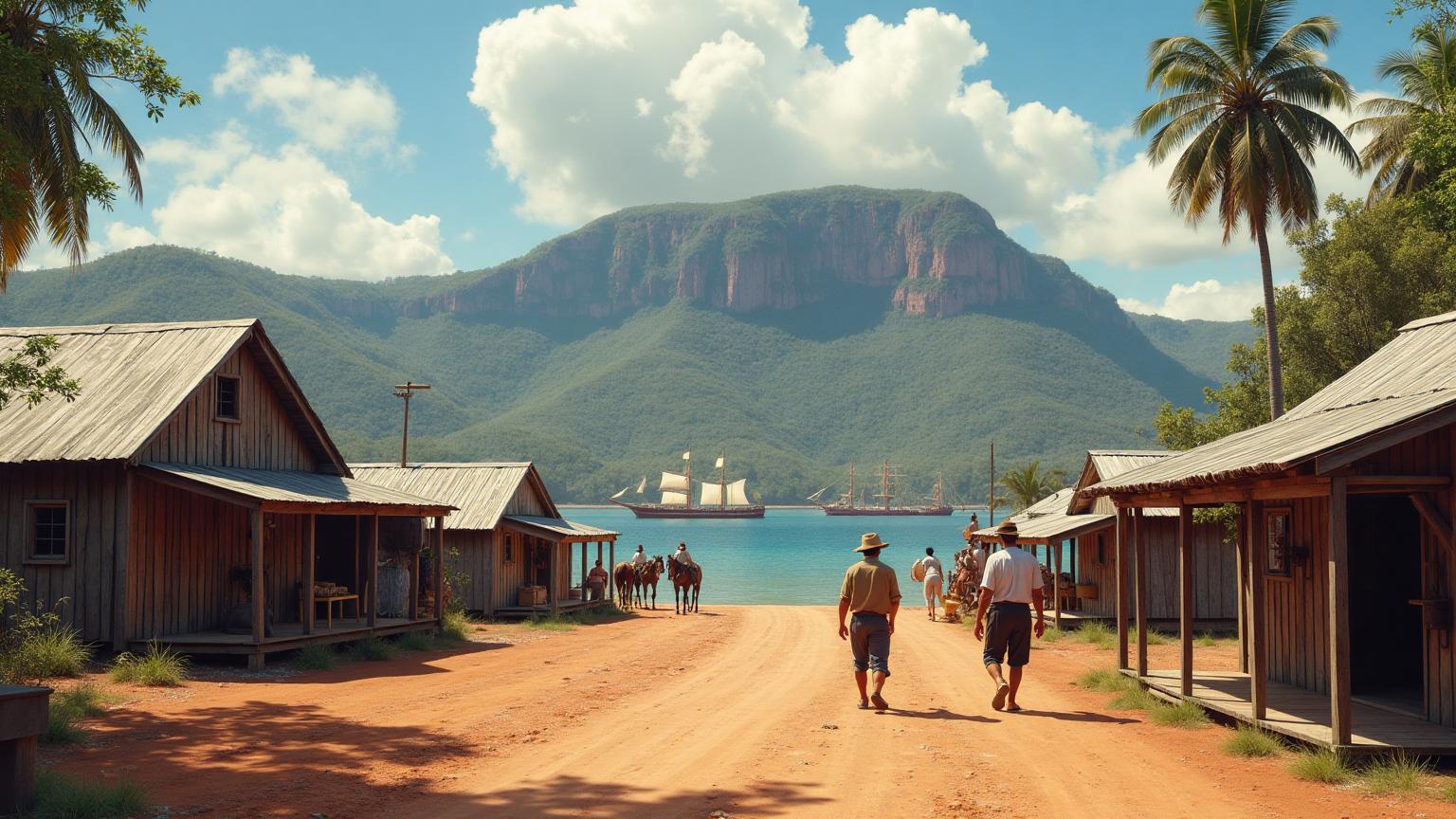
AI interpretation: What Townsville could have looked like circa 1864.
1864: A Camp Beside Ross Creek
The Moment Townsville Began
Andrew Ball's party reached the mouth of a small tidal creek and camped beneath a striking pink-granite hill. He named it Castle Hill — a reminder of fortress-like cliffs in Britain.
The first settlement was rudimentary:
- Canvas tents
- Timber huts
- Muddy tracks
- A crude jetty
- Mosquitoes and hard labour
Robert Towns backed the settlement financially. In recognition of his support, the settlement became Townsville.
From this tiny camp squeezed between the creek and the hill, a city was born.
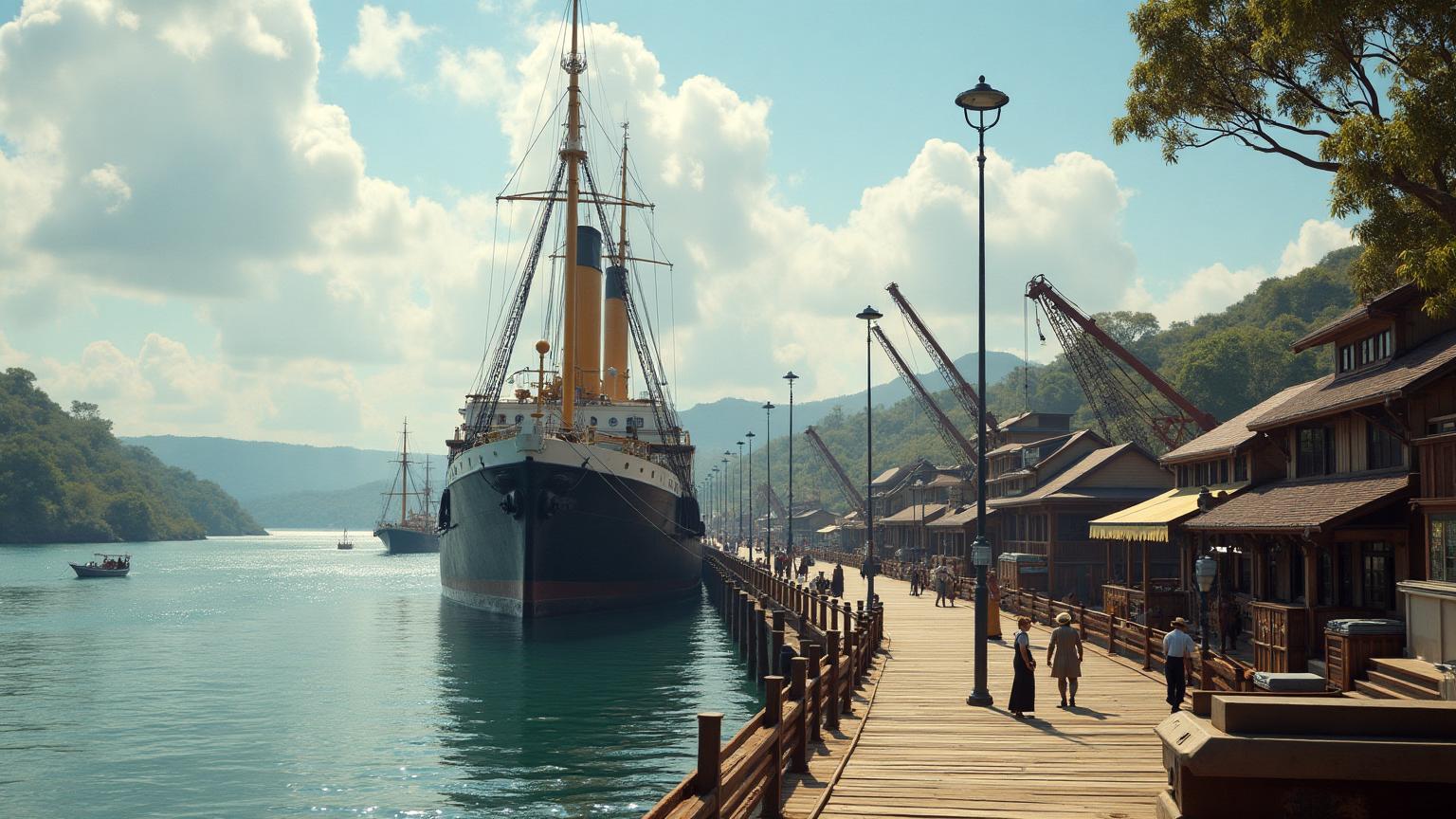
AI interpretation: What Townsville could have looked like circa early 1900s.
Gold, Sugar and a Frontier Boom
Gateway to the Goldfields
The real boom came when gold was discovered inland at Ravenswood and Charters Towers.
Townsville instantly became the Gateway to the Goldfields:
- Ships arrived packed with hopeful miners
- Stores filled with supplies, tools and machinery
- Wealth poured through the port
- Streets filled with packhorses, dust, mud and noise
Life was fast and raw:
- Timber pubs and boarding houses sprang up
- Streets alternated between deep mud and powdery dust
- Animals roamed freely
- Early civic buildings gradually appeared
At the same time, sugar cane expanded across the region. Plantation owners used coercive "blackbirding" to bring South Sea Islander labourers — a painful part of Queensland's history that still affects families today.
Townsville became a bustling, complicated frontier town — rough-edged, diverse and full of energy.
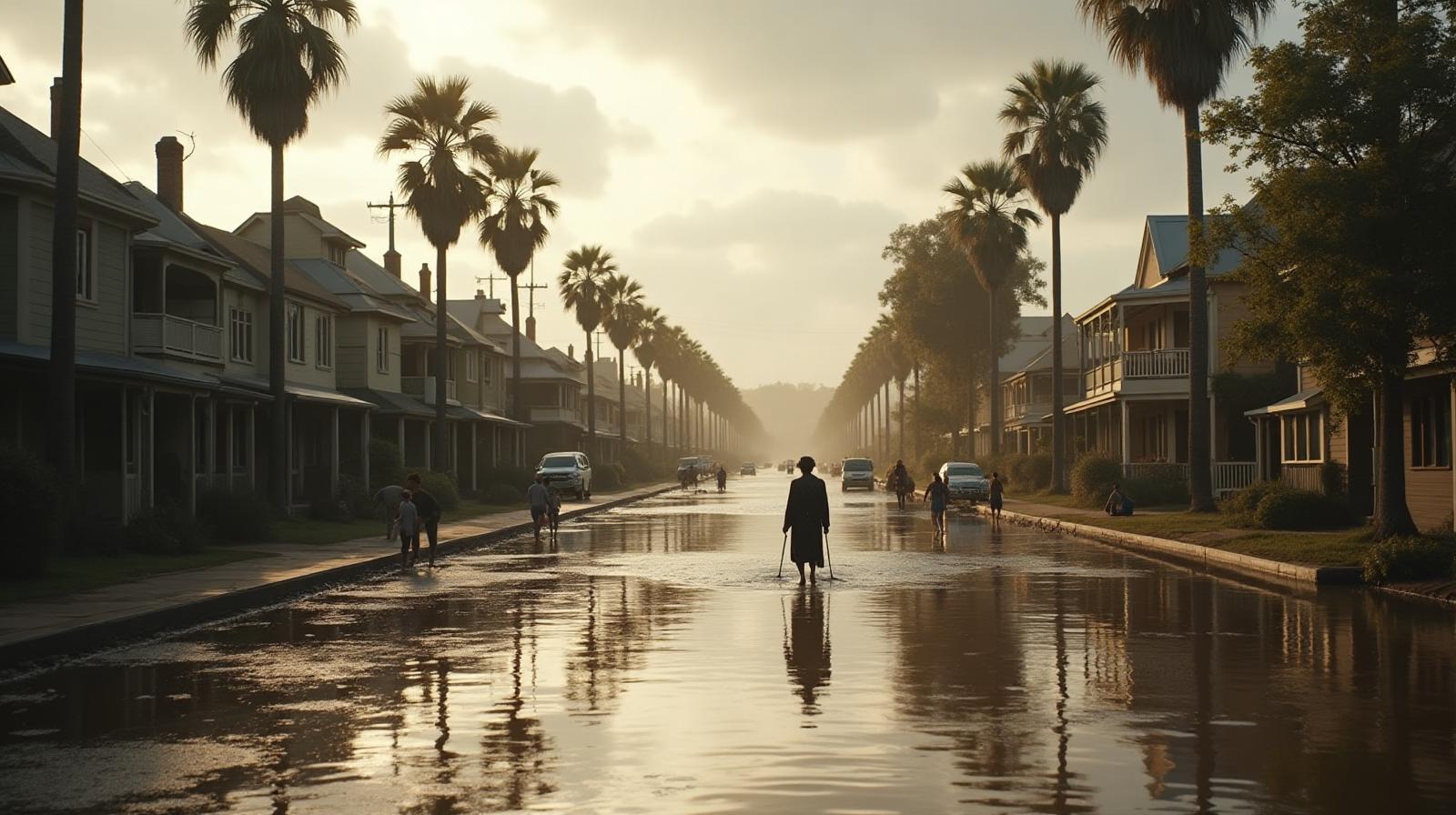
AI interpretation: What Townsville could have looked like circa late 1800s–early 1900s.
Cyclones, Floods and Tropical Toughness
Learning to Live with the Weather
Townsville's early decades were marked by one constant enemy: the weather.
Cyclones tore apart fragile buildings.
Floods turned streets into rivers.
Dust storms rolled across the Dry.
Humidity made daily life exhausting.
Locals adapted with ingenuity:
- High-set Queenslander homes on stumps to avoid floods
- Wide verandas for shade
- High ceilings and cross-breezes to ease the heat
- A strong culture of checking on neighbours during storms
Every cyclone season today echoes the resilience built over generations of tropical living.
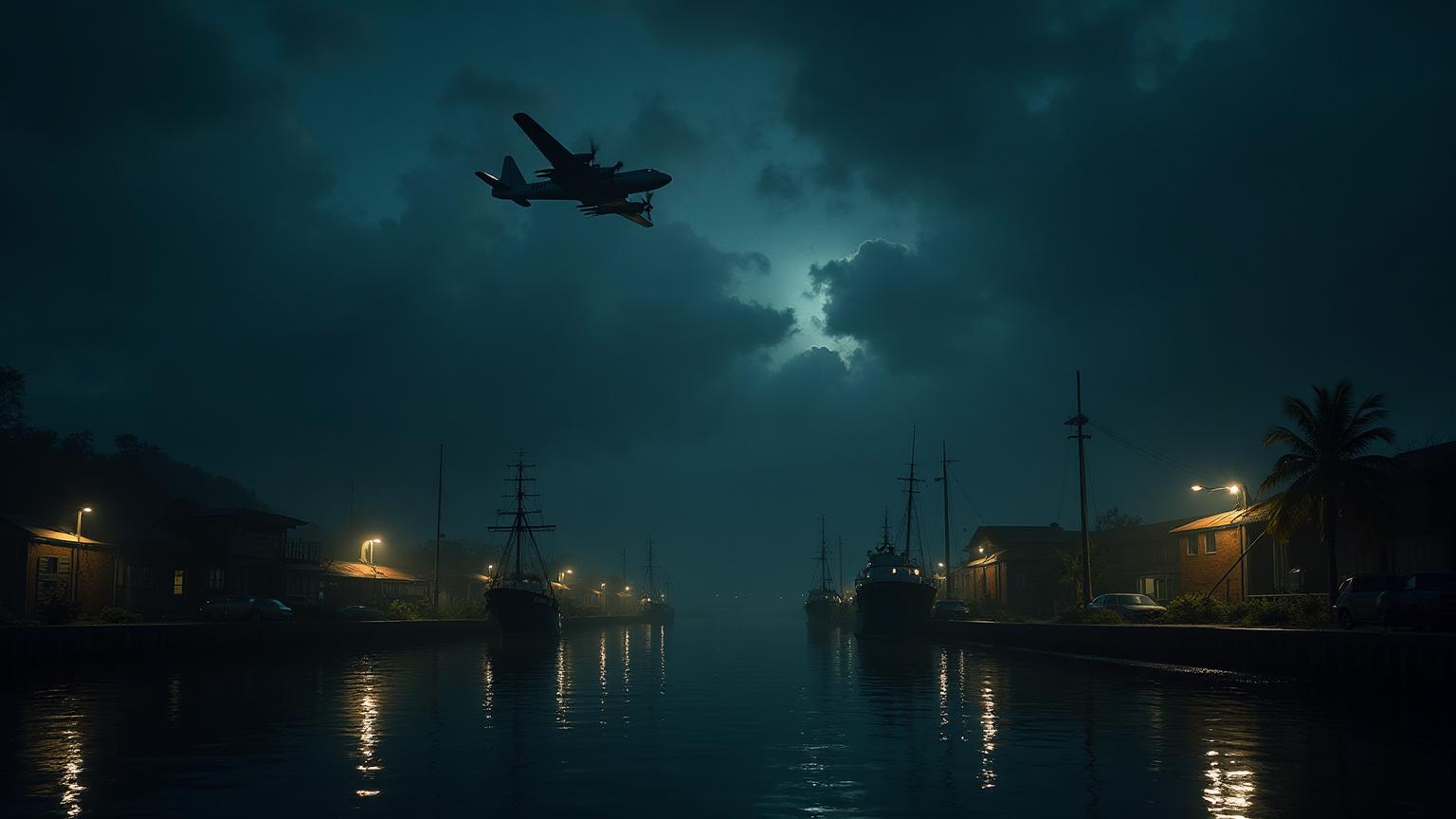
AI interpretation: What Townsville could have looked like circa 1942–1945.
World War II: A City on the Front Line (1942–1945)
Townsville became a major Allied base during WWII — one of the most strategically important in the Pacific.
The region hosted:
- Airfields
- Barracks
- Hospitals
- Naval operations
- Supply depots
- Tens of thousands of Australian and US personnel
In July 1942, Townsville experienced three night-time air raids by Japanese flying boats. Most bombs fell harmlessly into the sea or empty areas, but the attacks left a lasting mark on local memory.
Today the wartime story can still be explored at:
- Jezzine Barracks
- Magnetic Island fortifications
- Old bunkers, tunnels and gun emplacements
- Former airfield sites
Quiet now — but once part of a global conflict.
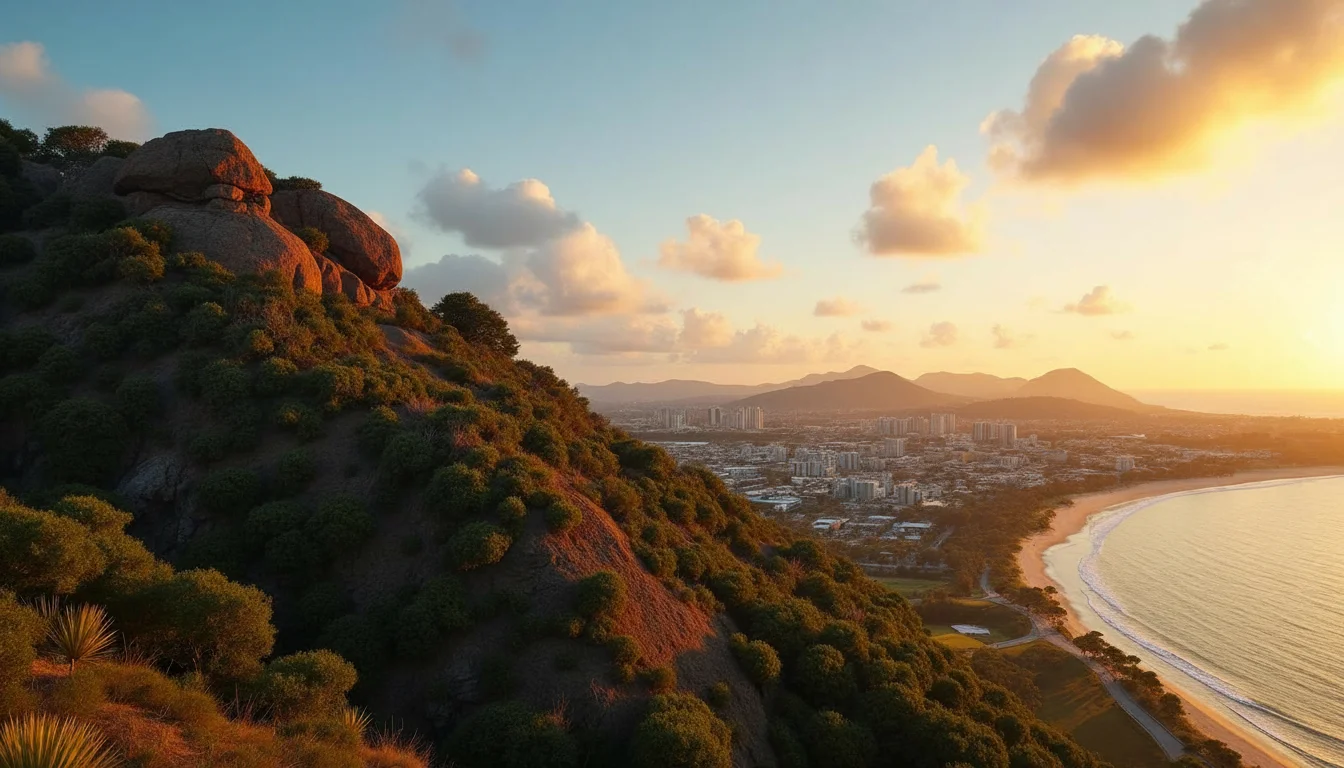
AI interpretation: What Townsville could have looked like circa 1950s–1970s.
Castle Hill, Townsville (Mid–Late 20th Century)
Growing Up After the War
After WWII, Townsville moved into a new era of growth.
- Suburbs stretched outward
- Cars reshaped the city's layout
- New parks, shops and schools emerged
- James Cook University helped establish Townsville as a centre for tropical science
- Defence bases expanded
Castle Hill remained a beloved landmark throughout this era, as the city transformed around it and grew into a modern regional centre.
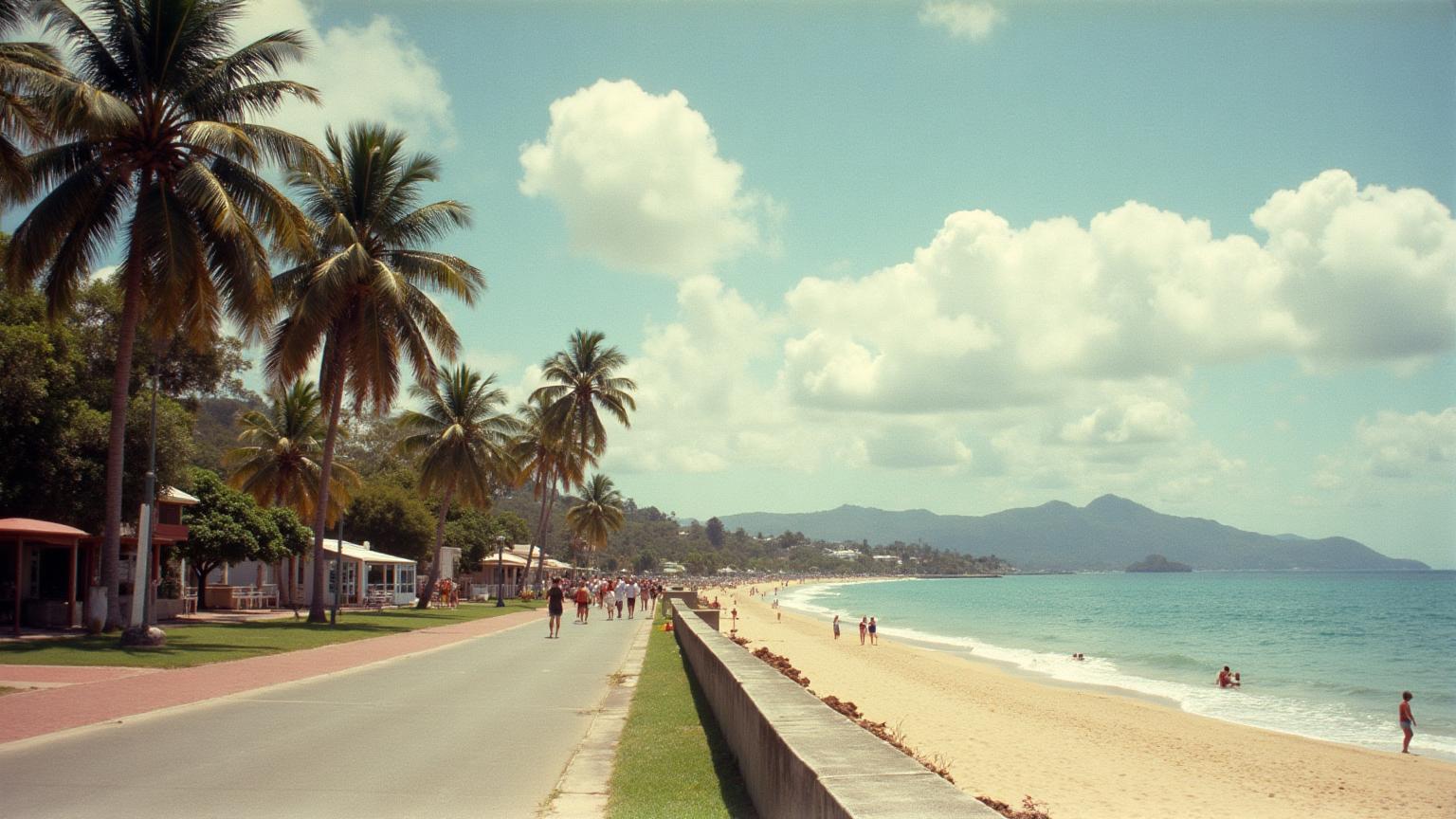
AI interpretation: What Townsville could have looked like circa 1980s–1990s.
1970s–2000s: Industry, Skyline and Waterfront Life
From Working Port to Tropical Lifestyle City
As Townsville grew, it became both a working industrial city and a vibrant tropical lifestyle destination.
Working Townsville:
- A major deep-water port
- Mineral exports
- Fuel terminals
- Industrial sites supporting inland mining
- Defence as a major employer
Lifestyle Townsville:
- The Strand transformed into a tropical foreshore
- The CBD gained its modern skyline, including the Sugar Shaker
- The Cowboys boosted local pride
- Arts and cultural festivals flourished
By the 2000s, Townsville had matured into a city where industry and lifestyle sit side by side.
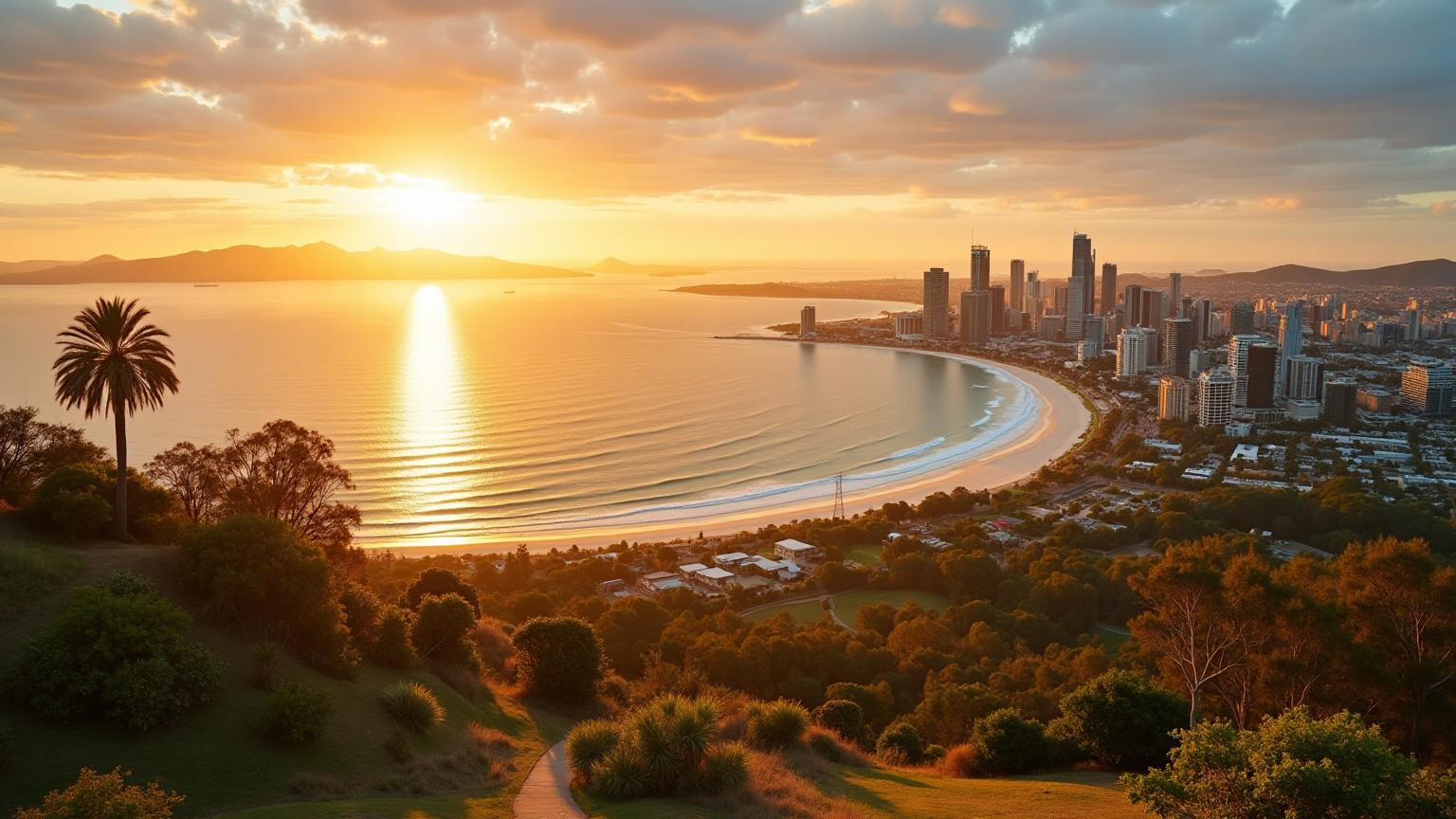
AI interpretation: A visual representation of modern-day Townsville.
Townsville Today: A City of Layers
Why the Past Still Matters
Modern Townsville is built on deep layers of history. You can feel them everywhere:
- On Castle Hill, where explorers camped and students painted
- Along Jezzine, where Aboriginal story and WWII concrete meet
- At the port, still pulsing with the same energy of the gold rush era
- On The Strand, where generations have walked, fished, swum and gathered
Townsville isn't just a tropical holiday spot. It's a working, living, evolving city with a long memory — shaped by weather, war, industry, culture and the Traditional Owners of this land and sea.
Understanding the history turns every lookout, every beach walk and every sunset into something richer.
About this guide
Written by Duncan Ross
Duncan has lived in Townsville since 2023 and writes Townsville Guide using local knowledge and carefully checked information.
This guide is based on research and official information. It does not claim firsthand experience.
Last checked: August 2026
This article primarily contains local observations and general visitor advice.
Spotted an error or something that has changed?
Please let us know so we can check and update the guide.
Report an update